Garden Maintenance Bow — Recycling and Sustainability
 Garden Maintenance Bow is committed to creating an eco-friendly waste disposal area and a sustainable rubbish gardening area that serves households, communal courtyards and small commercial sites across Bow and the surrounding boroughs. Our approach to garden maintenance in Bow emphasises practical, repeatable measures that reduce landfill, divert organic waste and support local reuse networks. We design operations so that every job contributes to a measurable sustainability target and leaves green spaces healthier than we found them.
As part of our Bow garden services, we integrate municipal recycling standards and the boroughs' approach to waste separation. We work with clients to separate organics, mixed recyclables and residual waste at source, using labelled sacks and onsite bins that match local authority streams. Our teams are trained in local recycling practices so that garden clearances and routine maintenance comply with council separation rules for paper, card, glass, metal and compostable material.
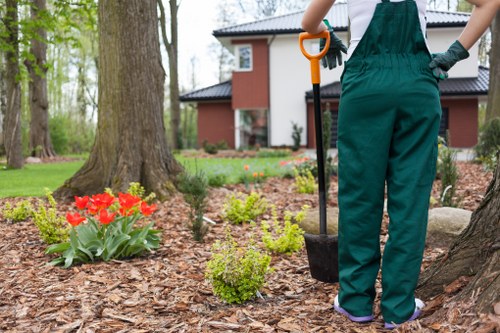 Low-impact disposal routes are a core part of our sustainable garden maintenance Bow programme. We use a network of nearby transfer stations and civic amenity sites that prioritise material recovery. These local transfer stations accept green waste, wood, inert soil and recycling segregated in accordance with the boroughs' schemes, keeping collection miles low and ensuring the highest possible diversion rate from landfill.
Targets, Metrics and Circular Partnerships
We set an ambitious recycling percentage target for all garden maintenance jobs: our goal is to divert at least 85% of material from landfill across routine maintenance and clearance contracts by 2027. That target covers compostables, wood chip, metals, plastics (where recyclable), and soil resources that can be processed, reused or returned to households as reclaimed topsoil or mulch. This recycling percentage target is reviewed quarterly against actual tonnage delivered to approved facilities.
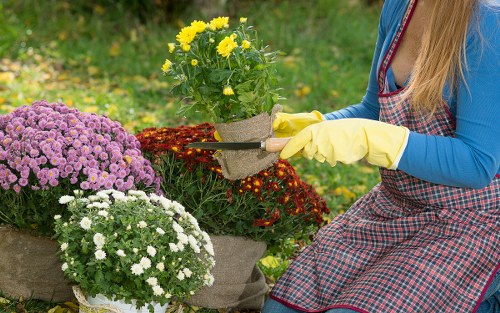 Partnerships with charities and community groups multiply the environmental benefit of every task. We collaborate with local social enterprises and charities that accept plant pots, garden tools and surplus soil for community allotments, urban farms and social projects in the borough. These relationships turn clearance waste into resources—donated timber can become raised beds, and much of the organic matter is composted for food-growing initiatives.
Our Bow-focused recycling strategy also includes targeted reuse initiatives. On-site separation enables quick identification of materials appropriate for donation, resale or community reuse. Items that are reusable are catalogued, photographed and offered through partner channels rather than entering mixed waste. This reduces disposal costs and supports a circular local economy.
Low-Carbon Fleet and Local Logistics
We operate a modern, low-emission fleet tailored for sustainable garden maintenance in Bow. Our low-carbon vans and small electric-assisted vehicles reduce diesel journeys and comply with urban emissions standards. Where a transition to fully electric vehicles is not yet feasible for specific routes, we employ hybrid models and strict route optimisation to cut mileage and idling time. Each vehicle carries separate containers to maintain separation of recyclables during transport and to avoid contamination.
 Logistics are organised to prioritise local transfer stations and borough facilities with the best recycling outcomes. We map routes to minimise travel through congestion zones and to ensure we reach designated civic amenity sites that accept separated green waste, wood, soil and recyclable plastics. By choosing local processing points, we reduce embodied carbon associated with long-haul disposal and support municipal systems for source-separated materials.
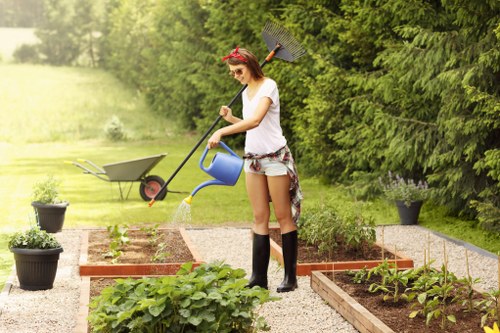 Practical steps for clients who want to support sustainable rubbish gardening area practices include:
- Pre-sort material where possible—segregate timber, branches, green waste and pots before our crew arrives.
- Keep hazardous items separate—no paints, solvents or asbestos in garden waste.
- Consider composting for prunings and small branches to reduce transported volumes.
Local Recycling Activity and Borough Schemes
Our services align with local authority waste separation policies across the boroughs we serve. Many councils in East London operate multi-stream collections—food and garden organics, mixed dry recycling and residual waste—so our on-site sorting practices are synchronised to those streams. For example, compostable garden matter is processed at approved green waste facilities, wood is chipped for biomass or landscaping use, and metal or glass items are deposited at designated recycling bays.
We maintain an updated register of local transfer stations and civic amenity sites that accept specialised garden materials. This allows us to direct materials to the best-placed facility for processing, whether that's a local composting centre, a wood-recycling unit, or a soil remediation depot. The register is reviewed monthly to reflect changes in municipal contracts and processing capacities.
Reporting and transparency are central to our sustainable gardening work. For larger projects we provide a breakdown of tonnages collected, percentage diverted to recycling, and destinations (transfer station, charity partner or reuse network). This data supports clients in meeting their own sustainability commitments and provides a clear record of how materials were handled.
How Sustainable Garden Maintenance Benefits the Community
By choosing our eco-conscious garden maintenance in Bow, customers support local job creation in recycling and reuse sectors as well as community-level environmental projects. Donations and diverted materials help allotments, food-growing schemes and social enterprises to thrive. Our collaborations with charities ensure that useful items are repurposed, not buried.
We prioritise incremental improvements: continuous reduction in residual waste, higher recycling percentages and greater use of low-carbon vans. Our combined approach—source separation, local transfer stations, charity partnerships and a low-emission fleet—creates a resilient model for sustainable garden maintenance Bow residents can rely on.
Garden Maintenance Bow remains dedicated to evolving its practices, increasing diversion rates and reducing transport emissions, all while providing high-quality maintenance and clearance services that restore and enhance green space value across the boroughs.